

Doing the Yorkshire Three Peaks next year? Here's a gym-based training plan from TNT Fitness coaches five miles from Ingleton, built to get your legs, lungs and knees ready.
You've signed up for the Yorkshire Three Peaks, or you're about to, and your training plan so far is "walk a bit more". That works until the long descents start and your knees and quads tell you they were never prepared for a day like this.
Here's a gym-based Yorkshire Three Peaks training plan from the coaches at TNT Fitness in Cowan Bridge, about five miles from Ingleton. Use this winter to build the strength and fitness the walk demands, and you'll arrive in spring ready to enjoy it, not just survive it.
What the Three Peaks Actually Asks of Your Body
The challenge links Pen-y-ghent, Whernside and Ingleborough in one day. That's roughly 24 miles with around 1,600 metres of climbing, and it's traditionally attempted in under 12 hours.
Here's what that means for your body:
- The climbs need strong glutes and quads, plus an aerobic engine that can keep working for hours.
- The descents are the part most people underestimate. Every step down, your quads work to brake you, and that's where tired legs and sore knees come from.
- The distance loads your calves, feet and hips all day.
- The rucksack asks your core and upper back to hold good posture long after you're tired.
A good plan trains all four.
Why Add Gym Training to Your Walking
You still need long walks, and nothing replaces time on your feet in real terrain. But walking alone has limits.
It's hard to build strength progressively on a walk, and it barely trains the controlled lowering your legs need on descents. In winter, short days and Dales weather also mean you can't always get on the hills.
The gym fills those gaps. It gives you targeted single-leg strength, controlled step-down work and conditioning you can do at 6am in December. Combine the two, and you have a complete plan.
The Plan: Three Phases From Now to Spring
This plan assumes you're walking the Three Peaks in late spring or summer. If your date is earlier, shorten each phase.
Phase 1: Build the Base (October to December)
Aim for two strength sessions, one conditioning session and one walk each week.
Strength A:
- Goblet squat or back squat
- Romanian deadlift
- Step-ups
- Calf raises
- Plank
Strength B:
- Split squats
- Slow step-downs, taking three seconds to lower (this is your descent training)
- Hip thrusts
- Single-leg Romanian deadlift
- Farmer's carries
Work in three sets of 8–12 reps, finishing each set with a couple of good reps still in the tank.
Conditioning: 20–30 minutes on an incline treadmill or air bike at a pace where you can just about hold a conversation.
How to Do a Slow Step-Down
This is the most useful exercise in the plan, and the one people rush. Here's how to do it properly:
- Stand side-on on a sturdy box or bench, with one foot on the edge and the other hanging off the side.
- Slowly bend the standing leg and lower the free heel towards the floor, taking three seconds.
- Tap the floor lightly with your heel, without putting your weight on it.
- Drive back up through the standing leg to the start.
- Keep your knee tracking in line with your toes and your hips level throughout.
Start with a low box and bodyweight. Add height or a dumbbell only when every rep feels controlled, and stop if you feel sharp pain in the knee.
Phase 2: Build Capacity (January to February)
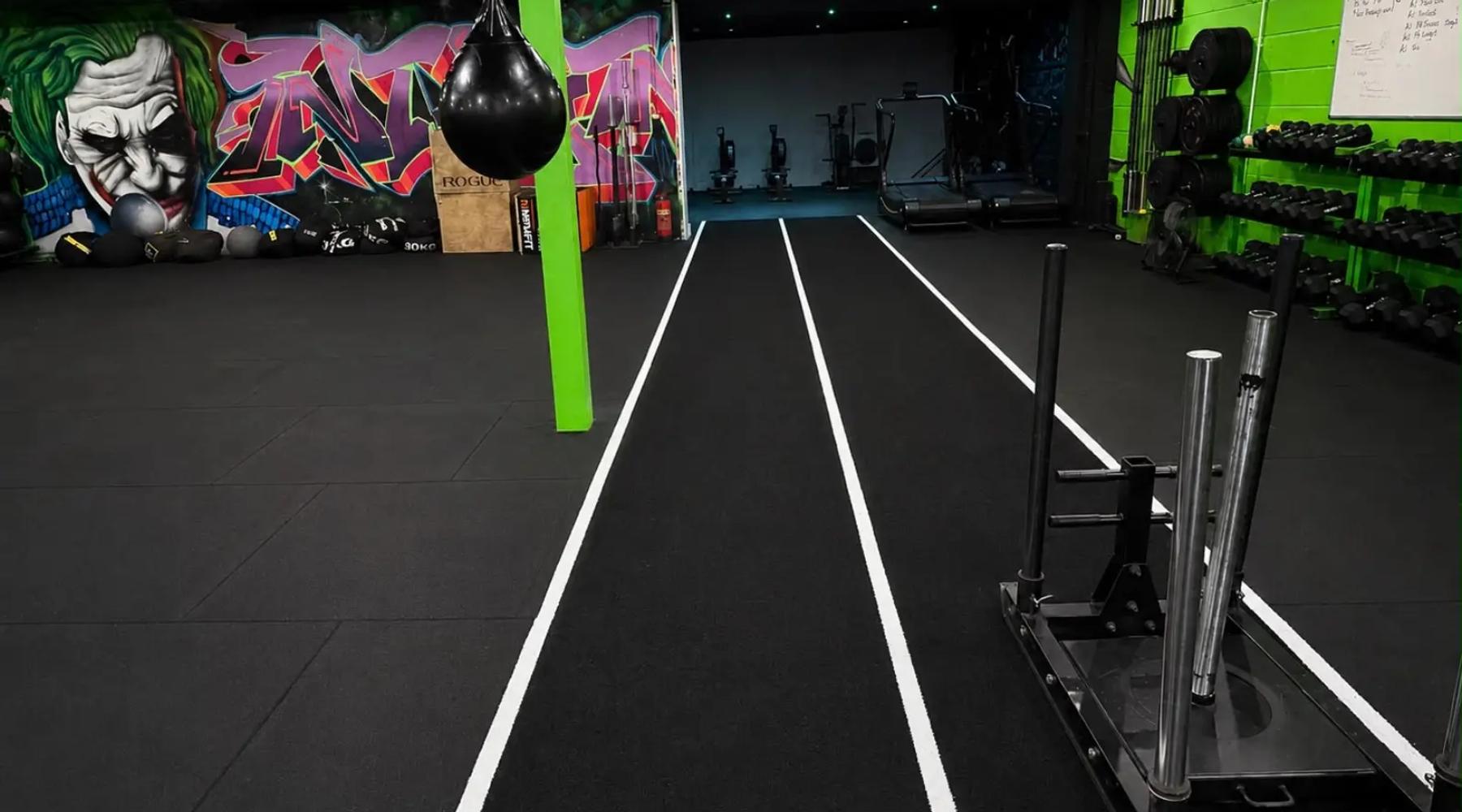
Now the work gets heavier and more specific. Do your step-ups wearing your walking rucksack, adding a little weight at a time. Add sled pushes on our 10m sled track for leg drive, and make your carries longer.
Stretch your conditioning sessions towards 30–45 minutes. Your weekend walks should get longer and hillier too. Ingleborough from Ingleton is close by.
Phase 3: Get Specific (March Onwards)
Strength drops to one or two maintenance sessions a week, and walking becomes the priority. Build up to back-to-back long days on the hills.
Use this phase to practise everything you'll do on the day: your pack, your food, your boots and your pacing. Ease right off in the final week or two so you arrive at the start fresh.
A Sample Week in Phase 1
- Monday: Strength A
- Tuesday: Rest or an easy walk
- Wednesday: Conditioning, or a T-Rox or MetCon class
- Thursday: Strength B
- Friday: Rest
- Saturday: Long walk
- Sunday: Rest
If you'd rather be coached through a strength session, the Strength & Conditioning classes at 6am on Tuesdays and Thursdays are a good place to start. Check current times on our class timetable and see the full line-up on our classes page.
Look After Your Knees and Feet
Most Three Peaks problems come from the legs being under-prepared for the descents, so protect them while you train:
- Do your slow step-downs every week. They're the closest gym exercise to coming down a fell.
- Train your calves properly. They work hard for every one of those miles.
- Break in your boots on long walks well before the day, never on it.
- Consider walking poles for the steep descents.
- Build your walking distance gradually rather than jumping straight to a huge day.
If something niggles, don't train through it. Karrina Howe is a BSc Sports Therapist and S&C coach who has worked with athletes across several sports. Sarah-Beth holds a BSc in Sports Rehabilitation and offers sports and remedial massage at TNT on Fridays. For anything more than a niggle, see a medical professional.
Train With Local Coaches
Tomi Tatham, TNT's founder and a former professional boxer, competes in Hyrox, strongman and powerlifting. Karrina brings sport-specific S&C, and Louise Coates coaches Hyrox and powerlifting. If you want a plan built around your own fitness, schedule and event date, any of them can write it with you. Meet them on our team page.
Not Sure Where to Start?
If you've never done much strength training, don't try everything above in week one. Start with the goblet squat, step-ups and calf raises, do two sets instead of three, and add one exercise a week.
Learning the movements is worth more than lifting heavy in the first month. A coach can check your technique in a single session, and that's time well spent before you add a loaded rucksack.
Frequently Asked Questions
How long should I train for the Yorkshire Three Peaks?
Give yourself several months of consistent training, especially if you're not already walking regularly. Starting in autumn for a spring or summer challenge gives you time to build strength and distance without rushing.
Can I train for the Three Peaks in the gym?
The gym is ideal for the strength and conditioning side, particularly leg strength for the descents. You'll still need long walks on real hills for time on your feet, footwear and pacing.
What are the best gym exercises for the Three Peaks?
Step-ups, slow step-downs, split squats, Romanian deadlifts, calf raises, sled pushes and loaded carries. Between them they cover climbing, descending and carrying a pack all day.
How far is TNT Fitness from Ingleton?
We're in Cowan Bridge on the A65, around five miles from Ingleton. That makes it easy to combine gym sessions in the week with walks on Ingleborough at weekends.
Can a TNT coach write me a personal Three Peaks plan?
Yes. Our personal trainers can build a plan around your current fitness, your event date and any old injuries. Ring 07903 809293 to find the right coach.
Start Your Three Peaks Training at TNT Fitness
Whether you're in Ingleton, Cowan Bridge, Carnforth or commuting to Lancaster, TNT Fitness is the place to build the legs that get you round. Lancaster commuters can train at both gyms with the TNT + TNT Elite membership for £80 a month. Choose your plan on our memberships page, or ring us on 07903 809293 and we'll get your winter training started.